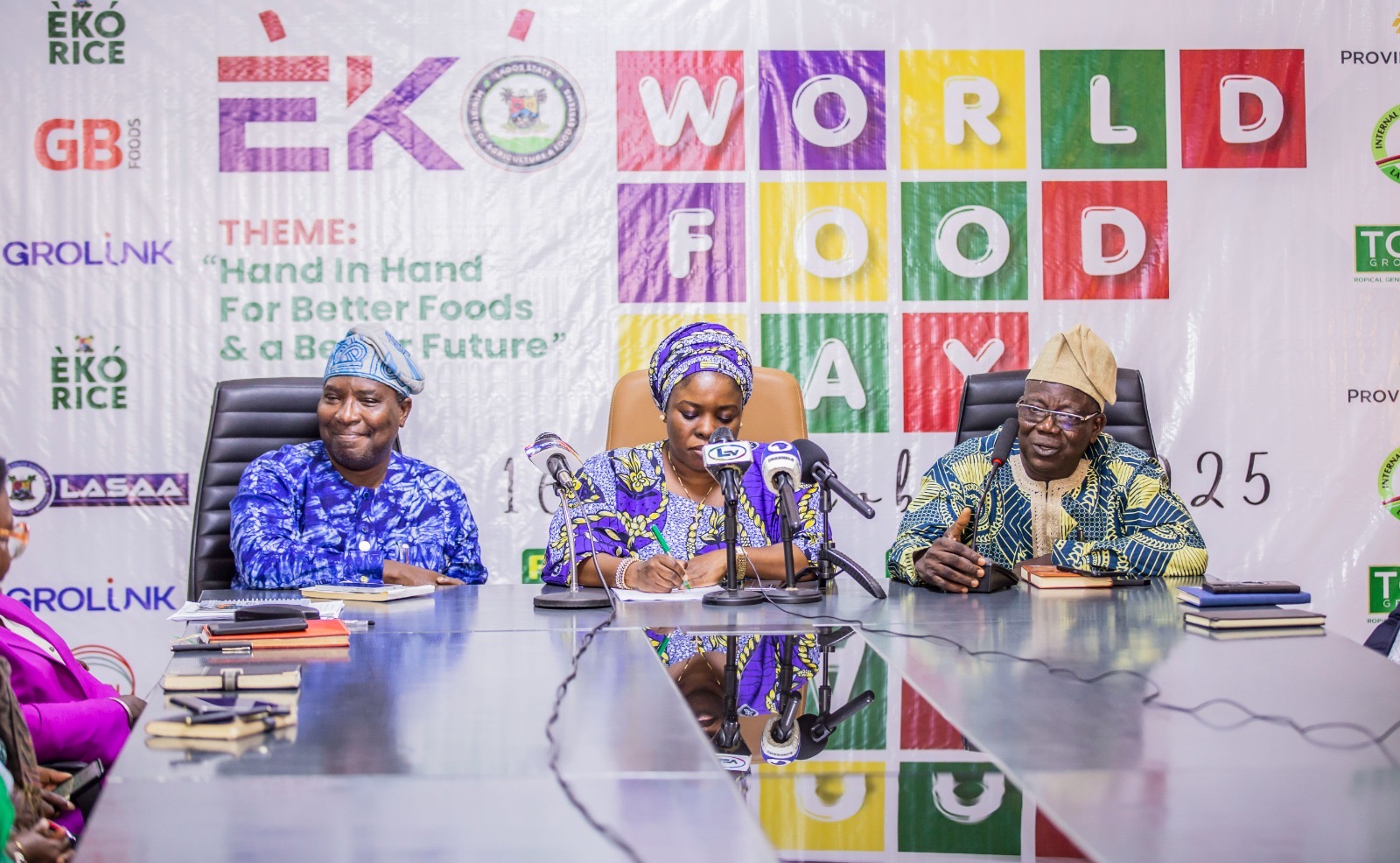
The Lagos State Government has reiterated its commitment to ensuring food security and sustainable agricultural growth as it begins activities marking the 2025 World Food Day Celebration.
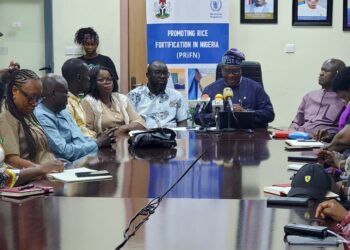
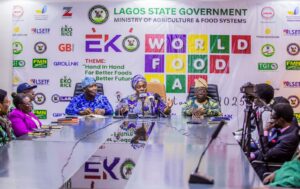
Speaking during a press briefing held at the Ministry of Agriculture and Food Systems, Alausa, Ikeja, on Tuesday, October 7, 2025, the Honourable Commissioner for Agriculture and Food Systems, Ms. Abisola Olusanya, reaffirmed the State’s dedication to building a resilient and inclusive food system that guarantees access to safe and nutritious food for all Lagosians.
Olusanya noted that this year’s global theme — “Hand in Hand for Better Foods and a Better Future” — underscores the need for stronger collaboration among government, private sector players, and development partners to drive innovation and sustainability across the agricultural value chain.
“Food security means that all people, at all times, have access to sufficient, safe, and nutritious food for an active and healthy life,” she said. “For Lagos, feeding a population of over 22 million people requires innovative strategies, bold investments, and strong partnerships.”
The Commissioner highlighted the State’s ongoing implementation of the Five-Year Agricultural and Food Systems Roadmap (2021–2025), which targets 40% food self-sufficiency by the end of the year, up from 20% in 2021.
She outlined several flagship programmes designed to transform the sector, including:
• Lagos Central Food Security Systems and Logistics Hub, currently at an advanced stage in Epe, with additional mid-level hubs under construction in Agege, Ibeju-Lekki, Ikeja, and Lagos Island.
• Produce for Lagos Programme, which guarantees farmers structured offtake agreements to stabilize prices and improve farmers’ income.
• Lagos Rice Mill, Imota, the largest in Sub-Saharan Africa, producing 2.5 million 50kg bags of rice annually and creating thousands of jobs.
• Eko Agro Mechanization Programme (EKO AGROMECS), connecting smallholder farmers to tractors and modern equipment through a digital platform.
• Lagos Agripreneurship Programme (LAP), which has trained over 4,400 young farmers and women, empowering 2,000 with assets and startup support.
• Lagos Agric Scholars Programme (LASP), promoting modern agricultural education in schools through aquaponics, hydroponics, and smart farming systems.
• Cattle Feedlot Project in Epe, designed to produce over 100,000 healthy cattle annually, ensuring safe and traceable beef for consumers.
• Lagos Aquaculture Centre of Excellence (LACE), a public-private project set to produce 50 million fingerlings and 24,000 tonnes of aquafeed annually.
• Eko Last Mile Meat Shops and Butchers Academy, aimed at transforming meat handling, food hygiene, and youth employment.
• Lagos Agrithon 2.0, an agritech competition with ₦150 million in grants for innovative startups in the food systems sector.
• Ounje Eko Farmer Subsidy Programme, which provided 25% subsidies on feeds, fertilizers, and mechanization services to over 5,000 farmers.
• Eko Flavour (Junior and Senior) culinary contests, nurturing culinary creativity and food innovation among young Lagosians.
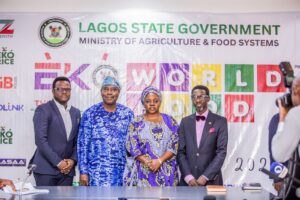
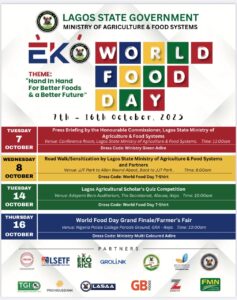
Olusanya also announced activities lined up for the World Food Day celebration, including a Road Walk on Wednesday, October 8, from JJT Park to Allen Avenue; a Lagos Agric Scholars Quiz Competition on October 14 at Adeyemi Bero Auditorium, Alausa; and the Grand Finale on October 16 at Ikeja Police College Parade Ground.
She expressed gratitude to partners including the British American Tobacco Nigeria Foundation, Origin Tech Group, Zenith Bank, TGI Group, Olam Nigeria, and Providus Bank for their continued support toward achieving the State’s agricultural goals.
“As we commemorate World Food Day 2025, I urge all stakeholders to join hands with the Lagos State Government to ensure that every household has access to affordable, safe, and nutritious food,” Olusanya added.
The Commissioner officially declared the Y2025 World Food Day Celebration open, reaffirming Governor Babajide Sanwo-Olu’s administration’s unwavering commitment to sustainable food systems and economic prosperity for all residents.