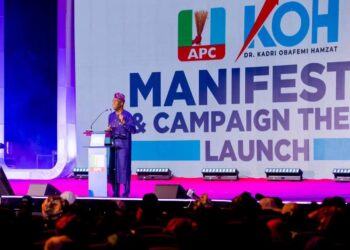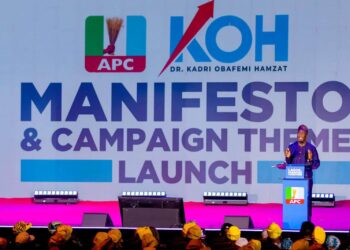
The Chairman of the Anniversary Planning Committee of the Mosque Guidance and Development Lagos Initiative (MGDLI), Alhaji Hakeem Bello, FNGE, has commended the Lagos Promise, the manifesto of the All Progressives Congress (APC) governorship candidate, Dr Kadri Obafemi Hamzat, particularly its policy commitments on healthcare, environmental sanitation, emergency preparedness and community safety.
Bello said the proposed policies align with MGDLI’s advocacy for healthier, safer and better-governed faith communities, stressing the need to recognise religious institutions as strategic partners in grassroots development and governance.
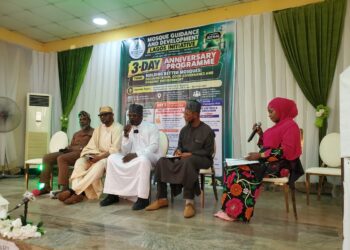
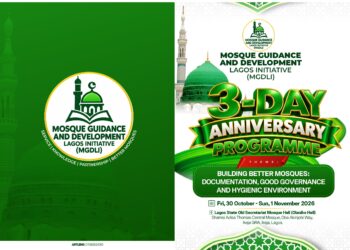
He made the observations in his closing address at the organisation’s three-day anniversary programme, titled ‘Three Days, One Purpose: For the Sake of Allah, We Did It Together’, where he highlighted areas of convergence between the initiative’s objectives and Hamzat’s proposed development agenda for Lagos State.
According to Bello, Hamzat’s Our Health, Our Dignity agenda, which proposes expanded primary healthcare, wider health-insurance coverage and increased screening for non-communicable diseases, reflects policy priorities capable of improving the wellbeing of residents.
He also identified the Clean Ground Promise, which focuses on improved waste collection, drainage and environmental resilience, as an important commitment that could strengthen environmental sanitation across communities.
Bello particularly highlighted the manifesto’s Safe Communities programme, which proposes extending preventive safety initiatives to schools, markets, motor parks and faith communities, alongside plans to strengthen fire, rescue and ambulance services, community preparedness and emergency response.
He said the inclusion of faith communities in the proposed safety framework demonstrated the importance of engaging religious institutions in policies designed to protect lives, improve public welfare and promote sustainable community development.
The MGDLI committee chairman expressed optimism that the commitments outlined in the Lagos Promise would translate into tangible benefits for residents, while encouraging stronger partnerships between government, religious organisations, professionals and other stakeholders.
He maintained that mosques and other faith-based institutions should not be regarded merely as centres of worship but also as important partners in promoting public health, environmental responsibility, social welfare and community safety.
Bello added that the objectives of MGDLI’s anniversary programme reinforced the need for accountable leadership, proper institutional management and sustainable development, noting that effective governance must address both infrastructure and the everyday welfare of citizens.
The three-day anniversary programme featured discussions on mosque governance, financial accountability, proper documentation and institutional sustainability, alongside community medical outreach, first aid training and environmental hygiene activities.