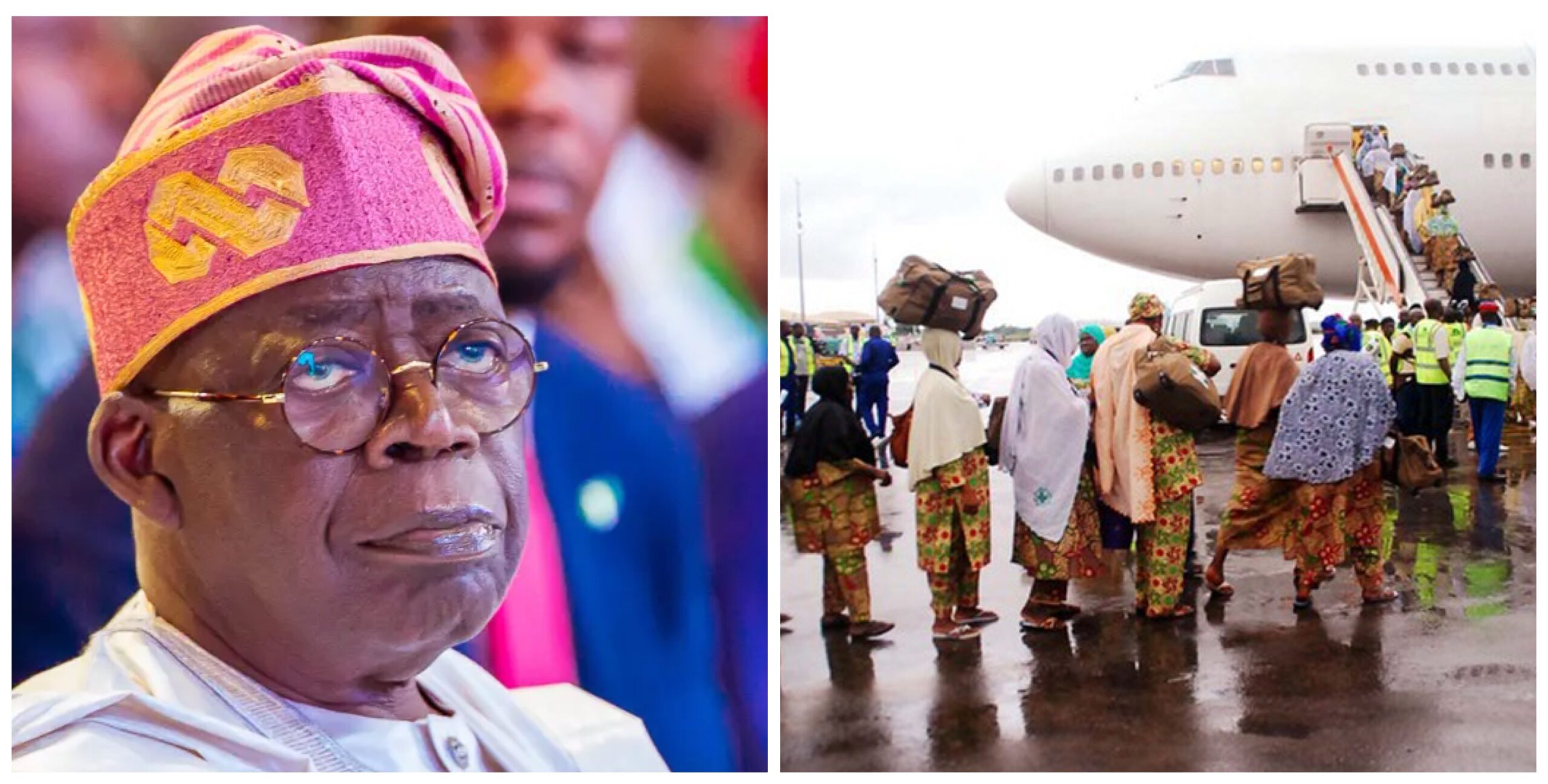
Concerned Private Travel Operators have called on President Bola Ahmed Tinubu to order an independent investigation into the allocation of Hajj 2027 slots to Nigerian tour operators, alleging that 5,000 of the 15,000 seats originally allocated to private operators were diverted to two newly introduced companies linked to Kano and Adamawa States.
The operators said the development had created serious questions about transparency, fairness and the integrity of Nigeria’s Hajj administration, particularly after more than 500 licensed Hajj operators nationwide were left to share the remaining 10,000 slots.
Their demand followed revelations from engagements involving representatives of Nigerian tour operators, the National Hajj Commission of Nigeria (NAHCON) and officials of the Saudi Hajj Ministry concerning the distribution of Hajj 2027 slots.
According to a detailed account of the engagements, the Saudi Hajj Ministry had initially agreed to an allocation of 25,000 seats for Nigerian tour operators. Following discussions with NAHCON on a gradual implementation process, the figure was reportedly settled at 15,000 seats for tour operators and 35,000 for the states.
However, the Saudi Hajj Team reportedly expressed concern after seeing a document released by NAHCON on August 7, 2026, showing only 10,000 seats distributed among 140 qualified tour operator companies.
The Saudi officials were said to have questioned the reduction of the private operators’ allocation and indicated that the matter could be escalated to the Saudi Minister of Hajj and Umrah.
The development subsequently triggered an emergency meeting involving the two designated representatives of Nigerian tour operators, known as SPOCs, at the Saudi Hajj Ministry.
At a subsequent meeting with the NAHCON Chairman, the Commission reportedly explained that the 15,000 seats allocated to private operators had not been reduced, but that 5,000 of the seats had been assigned to two companies from Kano and Adamawa States.
The explanation, however, has failed to assuage the concerns of some private operators.
They questioned why entities associated with the states should receive what they consider to be an additional share of the allocation meant for private Hajj operators.
The operators also raised questions over the identity of the two companies, which they said were conspicuously absent from the document earlier released by NAHCON detailing the distribution of the Hajj slots.
They argued that withholding the identities of the companies had deepened suspicion and created the impression that some operators were being given preferential treatment.
According to the account of the meeting, NAHCON maintained that the two companies were separate, duly registered entities and should not be regarded as the states themselves.
The Commission reportedly argued that the companies could be sanctioned or blacklisted if they failed to meet the required standards, unlike state governments, and therefore their participation did not conflict with the Saudi authorities’ objective of reducing states’ direct involvement in Hajj operations.
But Concerned Private Travel Operators remain unconvinced.
They argued that the central issue was not simply whether the companies were legally registered, but why newly introduced entities should receive a combined 5,000 seats when hundreds of established Hajj operators with years of experience were left to compete for the remaining allocation.
The operators described the situation as disturbing and called for complete disclosure of the allocation process, including the names, ownership and eligibility of the two companies.
They also questioned what they described as a troubling disparity between the number of operators sharing the available seats and the sizeable allocation reportedly granted to the two companies.
For the concerned operators, the controversy goes beyond the distribution of Hajj seats.
They alleged that the development could point to an attempt by powerful interests to manipulate the Hajj system for economic advantage at the expense of legitimate private operators who have invested years of resources and experience in pilgrimage operations.
The operators warned that such a development was inconsistent with the spirit of Islam and the sacred character of the Hajj pilgrimage, which they said should not be reduced to an avenue for a privileged few to corner economic benefits.
They consequently urged President Tinubu to wade into the matter and commission a full, independent investigation into the allocation of the 15,000 private Hajj operator slots.
They specifically demanded that the investigation determine how the 5,000 seats were allocated, identify the beneficiaries, establish their ownership and affiliations, and determine whether the process complied with NAHCON’s regulations and the terms agreed with the Saudi Hajj authorities.
The operators further warned that if the controversy was not urgently addressed, it could damage the credibility of NAHCON and expose Nigeria to embarrassment before the Saudi Arabian authorities.
They said the reported concern by the Saudi Hajj Ministry over the reduction of the tour operators’ allocation should not be treated lightly, particularly because Nigeria’s Hajj operations depend on close cooperation and confidence between Nigerian authorities and their Saudi counterparts.
Meanwhile, the NAHCON Chairman reportedly directed that payments by tour operators into the Commission’s account should be followed by immediate Central Bank of Nigeria transfers to the designated IBAN accounts.
The concerned operators, however, maintained that their immediate priority remained transparency, fairness and accountability in the allocation of Hajj 2027 slots.
They insisted that the future of Nigeria’s private Hajj operations should belong to genuine and experienced tour operators who have consistently served Nigerian pilgrims, rather than individuals or entities allegedly seeking to exploit the pilgrimage industry for commercial advantage.
They therefore called for the publication of the complete allocation details and an independent review of the process, stressing that only a transparent resolution could restore confidence among operators and protect Nigeria’s reputation in the international Hajj community.