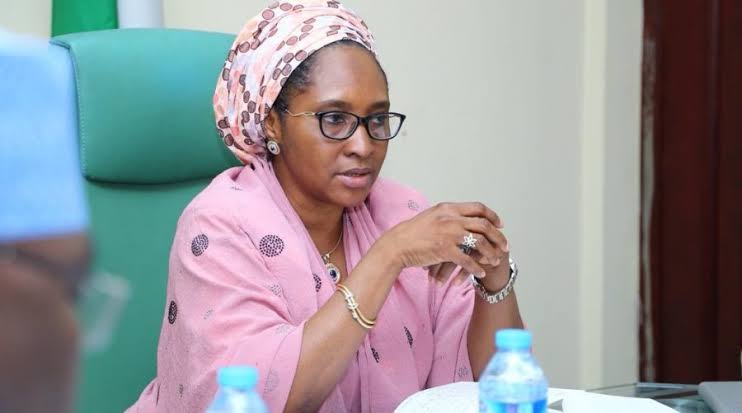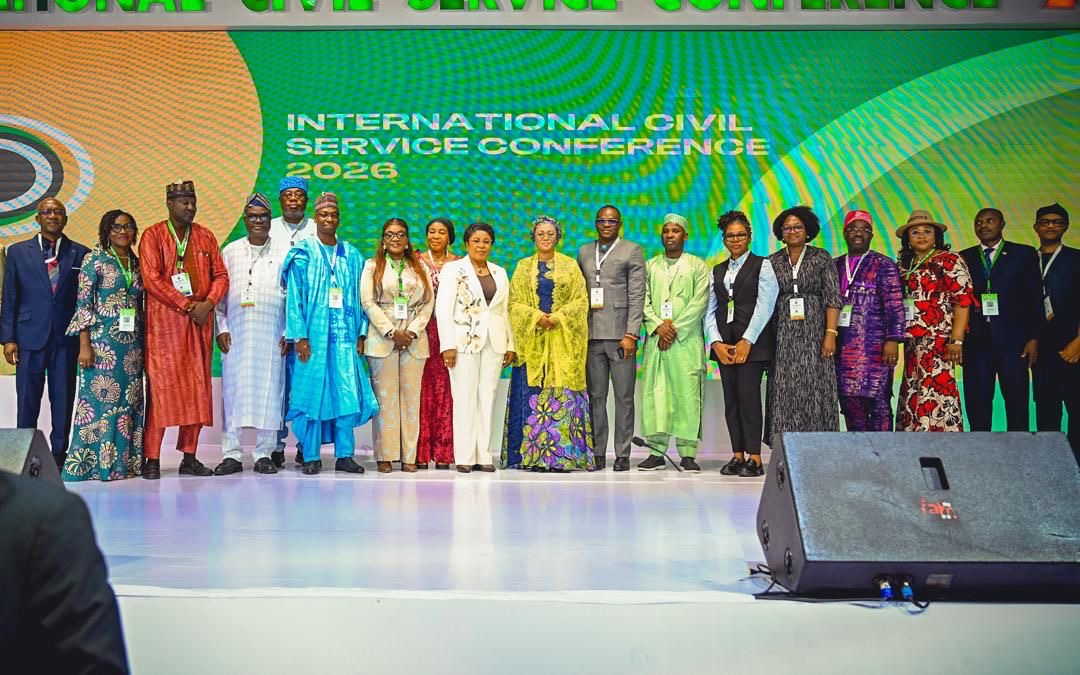
The First Lady of Nigeria, Senator Oluremi Tinubu, at the International Civil Service Conference (ICSC) 2026, held under the theme “Reforms, Resilience and Results,” formally launched INSPIRE Nigeria — the Inclusive Network for Supporting Progressive Leadership, Innovation, Reform and Equity for Women.
She urged civil servants to embrace the new programme, noting that it must reshape workplaces to enable women to rise from junior ranks to the highest levels of government.
The initiative forms part of broader federal commitments, including the National Gender Policy 2021–2026 and the Women’s Economic Empowerment Policy 2023–2028, both aimed at translating policy into binding institutional practice.
The First Lady described INSPIRE as central to the Renewed Hope Agenda’s drive for inclusion, productivity, and national transformation.
“This initiative speaks to the kind of civil service we must continue to build — one that supports its workforce, rewards competence, promotes fairness, encourages innovation, creates opportunities for professional growth, and truly reflects equity and excellence.”
Addressing over 5,000 delegates from 16 countries, she called for early and sustained leadership development.
“I am pleased to learn that this initiative is designed to reach women across different levels of the civil service, from junior officers to executive level. Leadership development should not begin only when a woman becomes a permanent secretary. A young officer who is properly mentored today may become a permanent secretary, Head of Service, minister, or a national leader tomorrow.”
She further linked women’s empowerment in the civil service to stronger institutions and improved governance.
“When women are empowered, institutions become stronger, governance improves, and citizens benefit from better service delivery. That is why initiatives like INSPIRE are not just important for women alone; they are vital for national progress.”
She also urged men within the service to continue supporting gender inclusion.
“I encourage you to continue your partnership in building workplaces that promote fairness, respect and equal opportunity for all.”
The First Lady commended the Head of the Civil Service of the Federation, Didi Walson-Jack, for convening the conference and driving inclusive reforms, while also applauding UN Women and development partners for their support.
“I must note that the success of INSPIRE will not be measured only by today’s launch, but by the impact created in the years ahead. Our nation needs institutions that can think, adapt, innovate, and compete globally.”
In her remarks, the Head of the Civil Service of the Federation, Didi Walson-Jack, described INSPIRE as a strategic platform designed to remove structural barriers limiting women’s advancement in public service and to promote inclusive leadership at all levels of government.
She explained that the programme will focus on strengthening institutional capacity, building professional confidence, and creating structured pathways for mentorship and leadership development.
According to her, it also seeks to address long-standing challenges such as limited access to mentorship, weak sponsorship networks, and institutional constraints affecting women’s career progression in the civil service.
Earlier, in a goodwill message, the Minister of Women Affairs and Social Development, Imaan Suleiman-Ibrahim, described INSPIRE as arriving “at precisely the right moment,” urging participants to translate conference commitments into tangible reforms.
She noted that the gathering reinforces the urgency of governance reforms and the central role of the civil service in national development.
She highlighted the persistent gap between the large number of women in the federal workforce and their underrepresentation in senior leadership positions.
“This is not a coincidence; it is a consequence of a legacy system with structural weaknesses. And it is a gap we can no longer afford,” she said, citing President Bola Tinubu’s vision that “the greatest tool for sustainable, scalable transformational development of our nation is the empowerment of our women.”
She added that the Federal Ministry of Humanitarian Affairs and Social Development would fully support the implementation of the initiative, bringing policy leadership, technical expertise, and institutional partnerships to bear.
The UN Women Regional Director for West and Central Africa, Maxime Houinato, also commended Nigeria’s progress on gender equality while urging sustained investment and accountability.
He acknowledged the government’s efforts but noted that women’s political representation remains low due to deep-rooted social norms, economic barriers, and institutional gaps.
“These are historical and structural challenges, and we commend the Government of Nigeria for seeking solutions that will allow women to express their full potential.”