The Lagos State Government has reaffirmed its commitment to building a stronger, more sustainable, and profitable agricultural sector through the adoption of data-driven solutions and the fight against Antimicrobial Resistance (AMR).
This was disclosed on Wednesday at the All Farmers Business Meeting (AFBM 2.0) organized by RID LAB, held at the Golden Kharis Event Centre, Ikorodu.
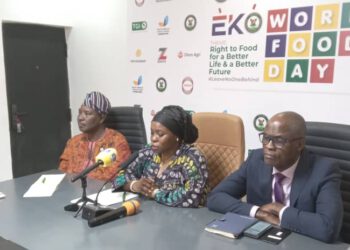
Speaking at the event, the Permanent Secretary, Ministry of Agriculture and Food Systems, Mr. Emmanuel Audu, commended the organisers for creating a vital platform where farmers, agripreneurs, scientists, regulators, and investors could converge to share knowledge and explore innovative pathways for agricultural growth.
Represented by the Deputy Director, Fisheries Department, Mr. Olorunfemi Oniyide, Mr. Audu emphasized that the future of agriculture lies in facts, figures, and analytics rather than guesswork. He explained that leveraging data would reduce losses, improve productivity, strengthen agribusinesses, and secure greater profitability for farmers.
On the dangers of Antimicrobial Resistance (AMR) in agriculture, Mr. Audu warned against the indiscriminate use of antibiotics in livestock and aquaculture, noting that its effects—including increased mortality in poultry and fish, failed treatments, and higher production costs—pose both economic and public health threats.
He assured stakeholders that the Ministry is committed to promoting proper diagnosis, responsible use of veterinary medicines, continuous farmer training, and sound policy frameworks to safeguard profitability and public health.
Reiterating government’s support for farmers, Mr. Audu stressed that Lagos State would continue to strengthen food systems, drive agricultural innovation, and secure food security for all residents. He urged participants to ensure that the meeting’s deliberations translate into tangible results for the benefit of farmers, the economy, and the nation.
Also speaking, the Chief Executive and Business Head of RID LAB, Mr. Femi Dairo, said the organization is tackling indiscriminate drug use in livestock by insisting on diagnosis before treatment. He noted that many farmers rely on guesswork when treating animals, leading to misuse of drugs, worsening diseases, and contributing to antimicrobial resistance.
“RID LAB is working to change this culture by showing farmers that science-driven farming is not a burden, but the gateway to profitability and sustainability. If profit alone were the objective, we would simply provide quick drug solutions without demanding tests. Instead, we chose the more rewarding path of accurate diagnosis. By removing guesswork, farmers can protect their animals, reduce unnecessary drug use, and achieve measurable results,” he said.
He added that farms that abandoned guesswork for evidence-based treatment have recorded higher survival rates and greater returns on investment, stressing that accurate data is key to overcoming waste and ensuring long-term sustainability.
In her address, the Managing Director of RID LAB, Mrs. Adewunmi Dairo, said the theme “Numbers Don’t Lie: Turning Farm Data into Profit” reflects the future of agriculture, where decisions must be guided by evidence rather than assumptions. She described data as a tool that shows farmers the path to sustainability, growth, and profitability.
Mrs. Dairo acknowledged the roles of government, regulators, industry partners, sponsors, and associations in driving agricultural transformation, noting that their collaboration is vital to ensuring food safety, public health, and farming progress.
She further emphasized that AFBM 2.0 represents a movement proving that farming is not guesswork but business. With data in the hands of farmers, she said, the sector can achieve food security, profitability, and shared prosperity.
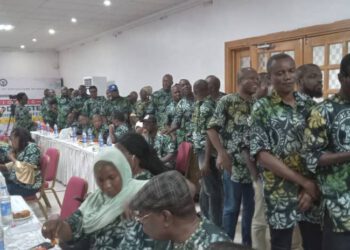
The meeting had in attendance livestock farmers and other key stakeholders in the agricultural sector.