The Lagos State Ministry of Agriculture and Food Systems has rolled out an ambitious multi billion naira food security and agricultural transformation agenda aimed at positioning Lagos as Africa’s leading food logistics and agribusiness powerhouse.
At the centre of the sweeping reforms is a ₦500 billion Offtake Guarantee Fund designed to protect farmers, stabilize food prices, attract investors, and guarantee food supply for millions of Lagos residents.
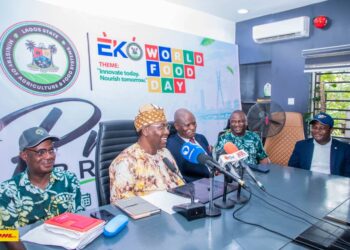
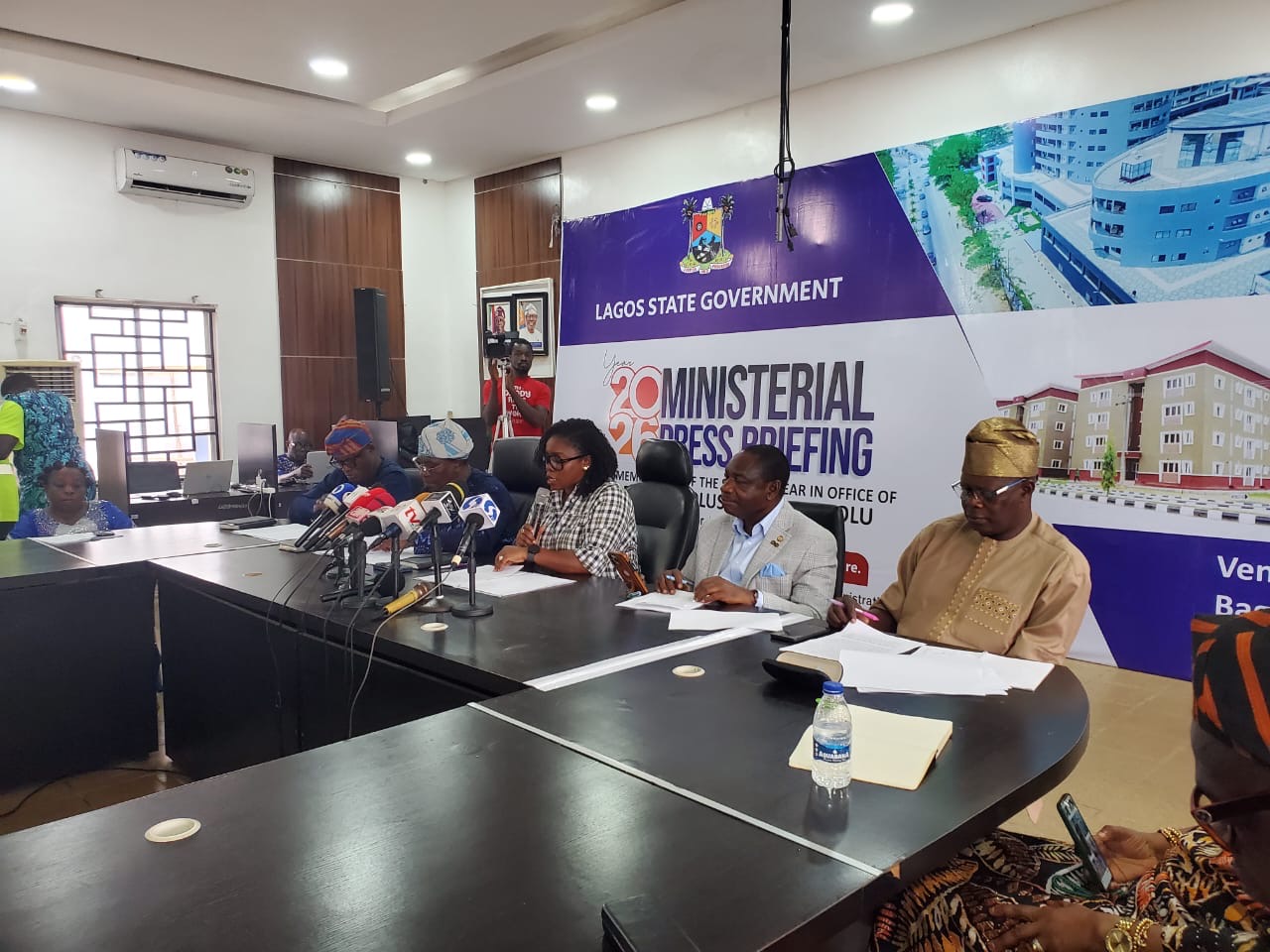
Speaking during the 2026 Ministerial Press Briefing held at the Bagauda Kaltho Press Centre, the Commissioner for Agriculture and Food Systems, Abisola Olusanya, said the administration of Governor Babajide Olusola Sanwo-Olu is building “a complete food systems architecture” capable of transforming agriculture into a major economic driver.
Olusanya revealed that the state government is moving aggressively from conventional farming methods to a technology driven food economy built around infrastructure, market access, logistics, youth empowerment, and private sector participation.
According to her, the newly introduced “Produce for Lagos” initiative will coordinate food production, transportation, processing, storage, and distribution through a structured market system that eliminates uncertainty for farmers and investors.
She explained that the ₦500 billion Offtake Guarantee Fund would serve as a safety net for producers and agribusiness operators by ensuring there is always a reliable market for agricultural produce.
“The future of agriculture in Lagos is no longer about isolated interventions. We are creating a coordinated food economy where production, logistics, processing, storage, and market access work together seamlessly,” she said.
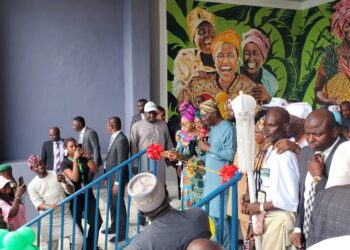
The commissioner further announced that the first phase of the Lagos Central Food Systems and Logistics Hub in Epe would be commissioned before the end of the year.
Described as the largest food logistics hub in Sub Saharan Africa upon completion, the facility is expected to process over 1.5 million metric tonnes of food annually while servicing more than 1,500 trucks daily.
She said the project would tackle post harvest losses, improve food safety standards, reduce supply chain bottlenecks, and create thousands of jobs in transportation, storage, packaging, processing, and food retail.
Olusanya also highlighted the achievements of the Lagos Rice Mill, which she described as the largest rice mill in Africa and the third largest globally.
According to her, the facility produced more than 500,000 bags of Eko Rice within the review period, while the government cultivated hundreds of hectares of rice farms across Eggua, Agonrin, and Ganyingbo to boost local paddy supply.
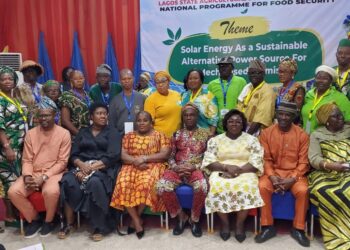
In a move to tackle unemployment and encourage youth participation in agriculture, the commissioner disclosed that over 125,000 farmers, fisherfolk, agribusiness owners, and food processors have benefited from various government training and empowerment programmes.
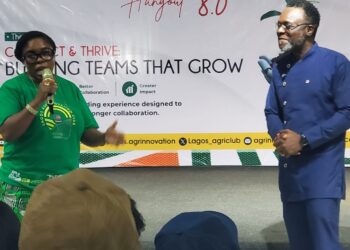
She said the Lagos Agripreneurship Program trained more than 1,500 youths in poultry, aquaculture, crop production, agribusiness management, and value addition, with beneficiaries receiving startup support and production assets.
Olusanya added that the Lagos Agric Scholars Program attracted applications from 442 schools across the state, helping to introduce secondary school students to practical agriculture, agribusiness innovation, and food production.
The commissioner also announced the expansion of the Lagos State Butchers Academy, an initiative designed to modernize the meat industry and promote hygienic meat processing practices among young entrepreneurs.
She disclosed that Governor Sanwo-Olu had approved the training of 40 additional youths and the establishment of 10 new meat shops across the state.
On aquaculture development, Olusanya said the Lagos Aquaculture Centre of Excellence would produce 50 million fingerlings annually and significantly reduce Lagos’ dependence on imported fish.
Construction work, she noted, has already commenced on the integrated facility, which will also include fish processing, feed production, cold chain systems, and research centres.
The commissioner said Lagos is equally expanding agricultural support through grants, subsidized farm inputs, extension services, and youth innovation programmes, with more than 66,000 additional beneficiaries empowered between 2025 and 2026.
She also revealed that the state government is strengthening coconut production through the Lagos State Coconut Development Authority as part of broader efforts to diversify the agricultural economy and promote climate friendly investments.
Highlighting the economic impact of food tourism and culinary enterprise, Olusanya said the 2025 Lagos Food Festival attracted over 13,000 participants and generated more than ₦150 million in food transactions.
She noted that the Eko Flavours culinary competition also helped discover and support young food entrepreneurs and chefs across the state.
Calling for stronger partnerships with investors, agritech firms, development agencies, logistics operators, and financial institutions, the commissioner declared that Lagos possesses the market size, infrastructure, and policy environment needed to become the food systems capital of Africa.
“We are building a Lagos where food is available, affordable, safe, and accessible, while creating wealth, jobs, and opportunities for millions of residents,” she stated.
Earlier, the Commissioner for Information and Strategy, Gbenga Omotoso, said the ministry has placed the state on a strong pedestal in the area of agriculture and food systems development.
He further stated that the ministry has been strategic in planning for the future of Lagos despite the state’s limited land availability for agricultural purposes, noting that food produce is regularly transported into Lagos from other parts of the country because of its large and ready market.
Omotoso also appreciated the media for its extensive coverage and representation of the activities of commissioners and heads of ministries since the commencement of the annual Ministerial Press Briefing.
In his vote of thanks, the Permanent Secretary of the ministry, Emmanuel Audu, commended members of staff for their unwavering support and assured residents of improved performance in the coming year.