The Lagos State Government has launched moves to overhaul the legal framework governing agriculture, fisheries, livestock and other components of the food system, in a major push to strengthen food security, attract investment and drive innovation in the sector.
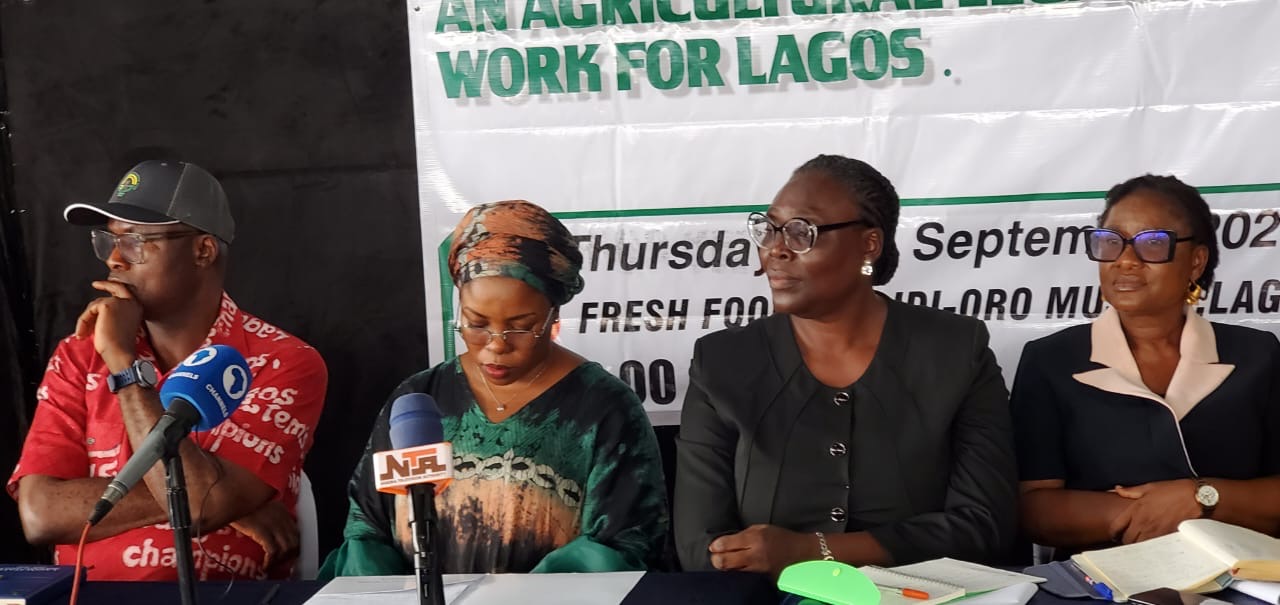
The initiative was unveiled on Thursday at a stakeholders’ meeting on the review of agricultural laws, organised by the Lagos State Ministry of Agriculture and Food Systems at the Fresh Food Hub, Mushin.
The Commissioner for Agriculture and Food Systems, Ms. Abisola Olusanya, said the review had become necessary as the State’s rapidly changing population, urban expansion, technological advancement and evolving business models continued to reshape the agricultural landscape.
Olusanya said the exercise went beyond amending outdated legislation, describing it as a strategic conversation on the future of agriculture and food systems in Lagos.
She said modern agriculture now extended beyond farming to include production, mechanisation, aquaculture, livestock, processing, storage, transportation, logistics, marketing, technology, finance, insurance, research, data and distribution.
The Commissioner said the review would examine whether existing laws remained responsive to the realities of modern agriculture and capable of creating an enabling environment for farmers, agribusinesses and responsible private-sector investment.
She also stressed the need for clearer institutional responsibilities, effective enforcement mechanisms and legislation capable of addressing emerging technologies and new agricultural business models.
“We cannot aspire to build a competitive, technology-driven and investment-friendly agricultural sector while relying entirely on a legal framework designed around circumstances that may no longer reflect the realities of today’s Lagos,” Olusanya said.
She urged stakeholders to make practical contributions to the process, challenge outdated assumptions and work towards a legal framework that would promote agricultural productivity, investment and innovation while strengthening food security and protecting legitimate interests.
The Director of the Ministry’s Legal Unit, Ms. Temitope Dawodu, said the review represented a decisive step towards modernising the laws governing agricultural production, processing, trade and land management in Lagos.
Dawodu said the process would identify outdated provisions, address overlapping mandates among institutions and incorporate contemporary practices, including climate-smart agriculture, agri-tech innovation, food safety standards and improved market access.
She said the proposed reforms must reflect the realities faced by stakeholders across the value chain, including smallholder farmers, fishers, aquaculture operators, livestock breeders, agro-processors, logistics providers, commercial partners and investors.
Representing the Executive Secretary of the Lagos State Law Reform Commission, Mrs. Olufunsho Olodo said the proposed agricultural Bills were designed to improve the way farmers, fishers, livestock operators, processors, investors, professionals, forest communities and consumers interact with government regulation and public services.
Olodo said the proposed legislation would strengthen food and animal safety, improve access to skills and productive assets, encourage responsible private investment and establish clearer processes for licensing, registration, inspection, traceability, complaints and appeals.
She noted that the Bills remained proposals pending enactment, adding that stakeholder input would be critical to refining them and ensuring that the resulting laws were practical, inclusive and enforceable.
According to her, the reforms are expected to reduce regulatory uncertainty, improve confidence in agricultural products, support jobs across the value chain and ensure that regulation protects the public without imposing unnecessary burdens on small operators.
Concerns were raised by stakeholders in the agricultural sector over harassment by state officials, multiple taxation, high registration fees, fears over the loss of wetlands, and the composition of the board, which is to be chaired by the State Commissioner for Agriculture and Food Systems.