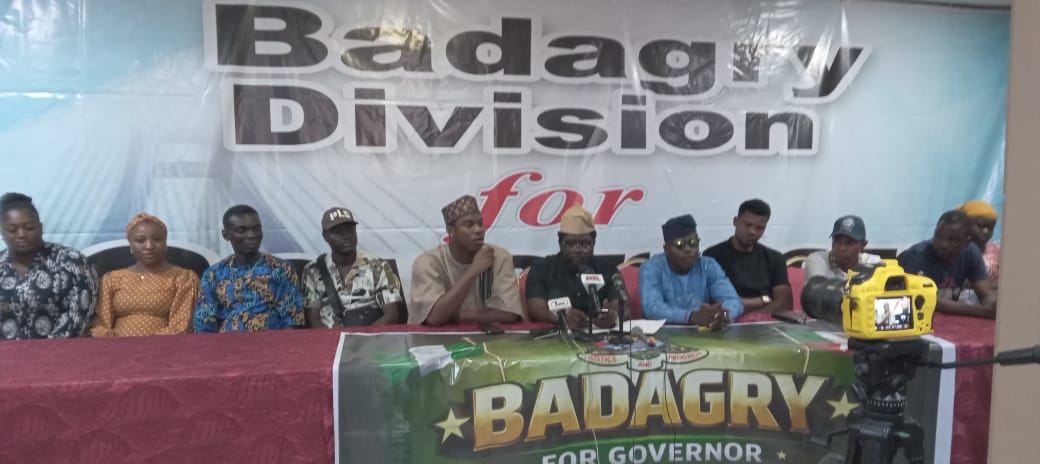
The push for the governorship of Lagos to be ceded to Badagry Division ahead of the 2027 elections gathered fresh momentum as youths from the area publicly declared their position, insisting that the time for political inclusion and equity has arrived.
At a press conference convened by Prince Seyon Adeyemi Akran, Convener of Lagos West APC Youth, the message from Badagry was delivered with clarity and urgency. According to him, the agitation reflects a collective resolve by the younger generation to support the stance already taken by traditional rulers and other stakeholders within the division.
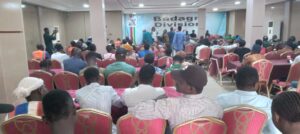
He stated that the demand for “Badagry Lokan” is rooted in historical reality rather than sentiment, noting that since the creation of Lagos State in 1967, Badagry Federation has not produced a governor.
Describing this as an established fact, Akran maintained that the call for zoning the state’s top seat to Badagry is a legitimate appeal anchored on fairness and equity.
He emphasised that Badagry has remained a consistent and reliable pillar within the political structure of the state, particularly under the All Progressives Congress. From electoral support to governance stability, he noted that the division has played its role without interruption.
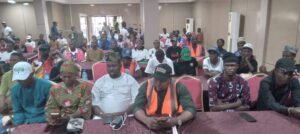
According to him, the contribution of Badagry to the progressive movement cannot be overlooked, as the people have remained loyal, dependable, and fully engaged in the growth of the party and the state.
Akran also drew attention to the place of young people in the unfolding political conversation, stressing that the demand for Badagry Lokan is equally a call for youth inclusion.
He warned against a system that sidelines the aspirations of young people, insisting that Badagry youths deserve access to opportunities, representation, and meaningful participation in governance.
He noted that beyond political considerations, the division is in need of accelerated development, particularly in infrastructure and economic growth, adding that inclusive leadership remains critical to achieving these objectives.
Reacting to concerns raised in some quarters about the leadership capacity of Badagry, Akran dismissed such views, describing them as unfounded and disconnected from reality. He argued that the division is home to competent individuals with the education, exposure, and experience required to lead a complex state like Lagos.
According to him, Badagry is not lacking in leadership potential, but has simply not been given the opportunity to demonstrate it at the highest level.
He further underscored the strategic importance of Badagry within the broader economic framework of Lagos State. Positioned as a gateway to West Africa, the division holds significant potential in tourism, agriculture, and cross border trade.
He explained that these advantages place Badagry at the centre of future economic expansion, making it a critical asset in the long term development plans of the state.
Akran stressed that the current moment calls for leadership that understands the terrain and is capable of translating these opportunities into tangible benefits for both the division and the state at large.
While making the case for Badagry, he pointed to individuals within the division who have demonstrated strong commitment to party growth and governance, noting that the call for zoning is supported by evidence of capacity and performance.
Among those highlighted was Samuel Mawuyon Ajose, whom he described as a figure whose contributions to party development and grassroots mobilisation have set him apart.
He noted that Ajose has invested personal resources in strengthening party structures, supported electoral processes across all 57 local government areas, and mobilised large scale support for progressive leadership across Lagos and the South West.
According to Akran, such contributions are not symbolic, but practical demonstrations of leadership capacity and commitment to the stability of the political system.
He added that Ajose’s consistent promotion of the Renewed Hope agenda through advocacy and grassroots engagement further reinforces his readiness for higher responsibility.
In his view, the question before Lagos is no longer limited to who should lead, but who has shown preparedness through concrete action. He argued that Ajose’s track record reflects experience, organisational strength, and the ability to deliver under real conditions.
Akran maintained that Badagry does not need to search beyond its borders for credible leadership, insisting that the division has individuals who have already proven their competence and dedication.
Reiterating the collective stance of Badagry youths, he affirmed full alignment with traditional rulers and community leaders in the call for the governorship of Lagos State to be zoned to Badagry Federation.
He also reaffirmed support for President Bola Ahmed Tinubu, pledging continued loyalty to his administration and its Renewed Hope agenda.
According to him, the position of Badagry youths should not be interpreted as divisive, but as a justified demand for inclusion within the framework of fairness and balanced representation.
He stated further that Badagry has demonstrated patience, loyalty, and contribution over the years, and is now prepared to take its place in the leadership of Lagos State.