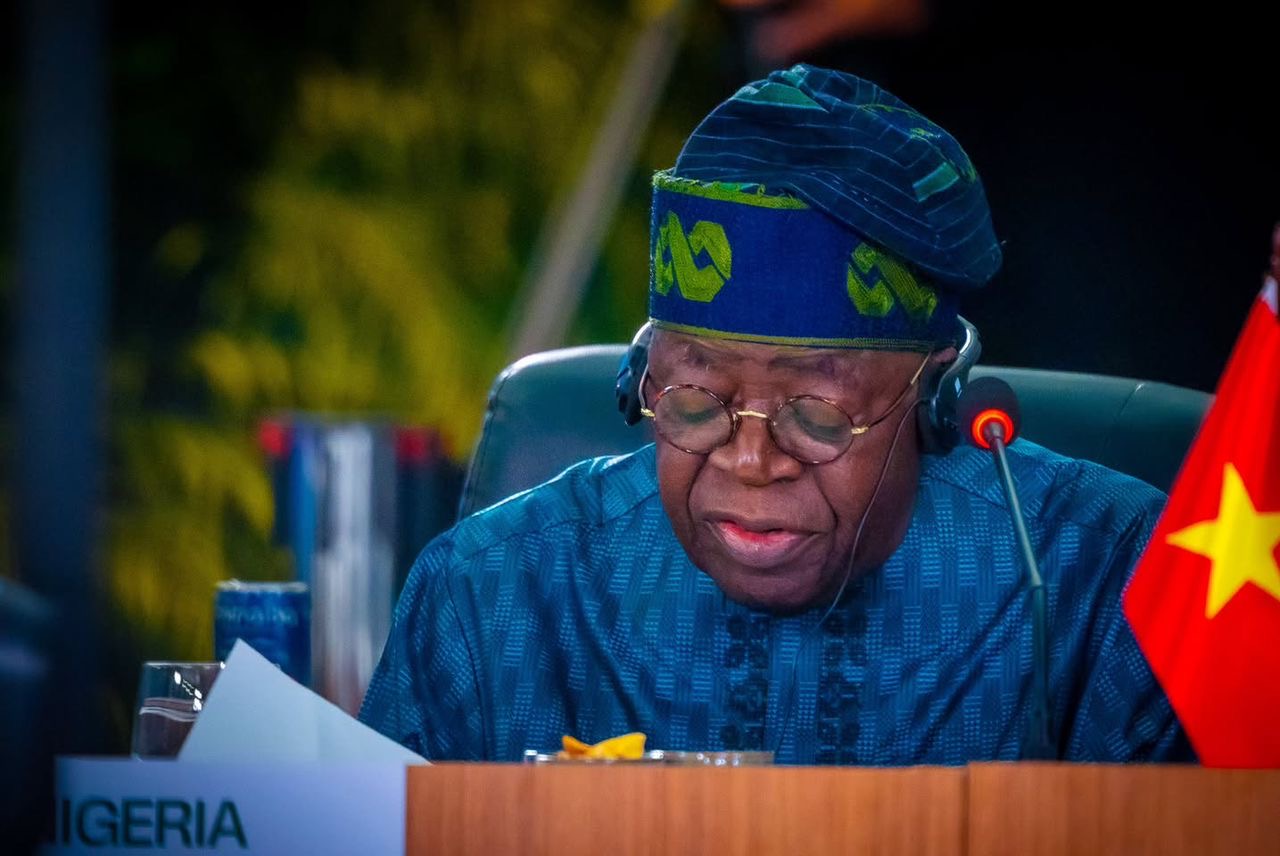
President Bola Tinubu has called for a bold restructuring of the global financial, healthcare, and governance systems, urging world powers to embrace greater equity and inclusion for low-income and emerging economies — with Africa at the centre of the conversation.
Speaking at the 17th meeting of BRICS — the powerful bloc of emerging economies — held in Rio de Janeiro, Brazil, on Saturday, President Tinubu warned that environmental degradation, climate injustice, and health disparities continue to hinder growth across the Global South.
“Nigeria aligns with the BRICS vision,” Tinubu declared. “But we must move beyond dialogue to structural reforms. Financial restructuring and a reevaluation of global systems are urgent.”
Nigeria formally became the ninth partner country of BRICS in January 2025, joining Belarus, Bolivia, Cuba, Kazakhstan, Malaysia, Thailand, Uganda, and Uzbekistan — a decision ratified at the 16th BRICS Summit in Kazan, Russia, in October 2024. Tinubu’s invitation to this year’s summit came directly from Brazilian President Luiz Inacio Lula da Silva.
The Nigerian leader pointedly reminded the global community that while Africa contributes the least to global carbon emissions, it suffers the most from the effects of climate change.
“We must chart a new path rooted in justice, sustainable technology transfer, and accessible financing — so that emerging economies like ours are not left behind,” he said.
President Tinubu spotlighted Nigeria’s leadership in regional climate action through the African Carbon Market Initiative and the Great Green Wall project, adding that the upcoming COP-30 summit should serve as a springboard for stronger global commitment.
“Nigeria believes in South-South cooperation,” he stressed. “We cannot remain passive participants in global decision-making. We must be the architects of a future that addresses the real concerns of our people — especially the youth, who make up 70% of our population.”
On healthcare, the President urged the BRICS bloc to lead the charge in combating non-communicable diseases and in building resilient health systems. “BRICS should be a beacon for emerging solutions — anchored in solidarity, sustainability, and shared prosperity,” he added.
President Tinubu reaffirmed Nigeria’s long-term development vision, Vision 2050, and its nationally determined contributions under global climate frameworks. He also highlighted national efforts to scale up renewable energy, climate action, and universal health coverage.
He was accompanied at the summit by Nigeria’s Minister of Foreign Affairs, Ambassador Yusuf Tuggar, and Minister of Finance, Mr. Wale Edun.
As one of Africa’s largest economies and the sixth most populous country in the world, Nigeria’s voice within BRICS is expected to strengthen South-South cooperation and advance reform in global governance — key priorities under Brazil’s current BRICS presidency.