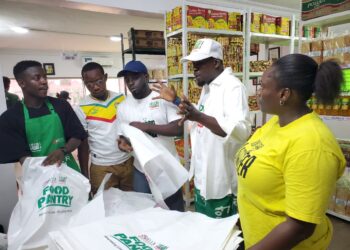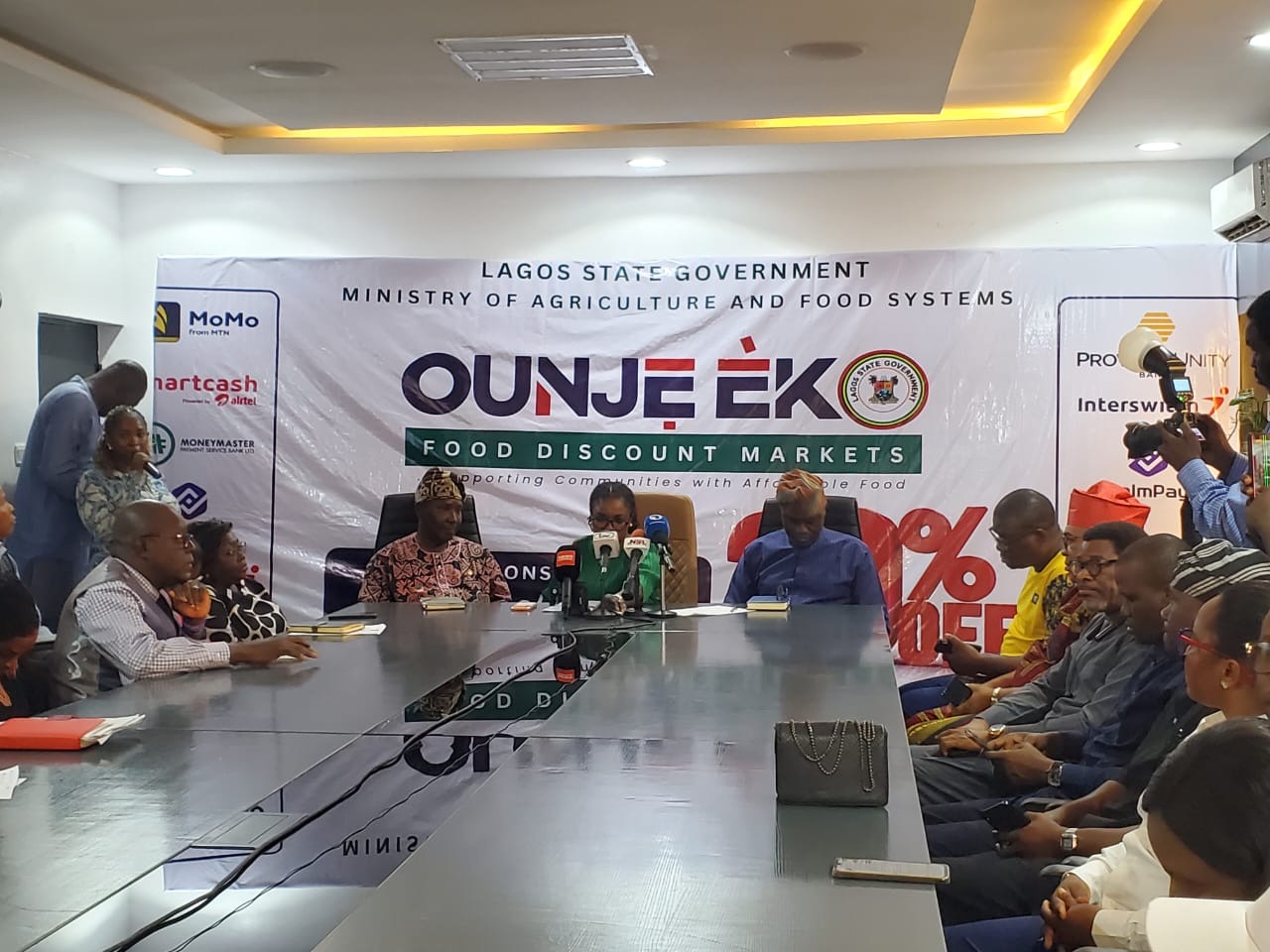
The Lagos State Government has announced the return of its Ounje Eko Food Discount Market Programme, targeting two million residents with a 20 per cent discount on selected food items during the 2026 festive season.
The Commissioner for Agriculture and Food Systems, Ms. Abisola Olusanya, announced this on Tuesday at a press briefing in Alausa, Ikeja, disclosing that the initiative would commence on Sunday, November 29, across 66 designated market locations.
She said the programme, approved by Governor Babajide Sanwo-Olu, was designed to cushion the impact of rising food costs and help households cope with increased spending during the festive period.
Olusanya dismissed suggestions that the initiative was politically motivated, stressing that its introduction in 2024 was driven by the need to make essential food items more affordable and give residents better value for their money.
Under the programme, beneficiaries will enjoy a 20 per cent discount on rice, beans, garri, bread, eggs, tomatoes, pepper, tatashe or shombo, and onions, subject to specified purchase limits.
The commissioner explained that each household would be entitled to one 5kg pack each of rice, beans and garri, two loaves of bread, one crate of eggs, two kilogrammes of tomatoes and one kilogramme each of pepper, tatashe or shombo, and onions.
She added that perishable food items were excluded to prevent potential losses for vendors and consumers.
The markets will operate across all 57 Local Government Areas and Local Council Development Areas in the five IBILE divisions of the state on November 29, December 6 and December 20, between 9:00 a.m. and 4:00 p.m.
Institutional markets will also be available at selected tertiary institutions, Lagos State University Teaching Hospital and the Alausa Secretariat, while the Lagos Fresh Food Hubs in Mushin and Agege will participate on designated Wednesdays and Saturdays.
Olusanya said the initiative formed part of the government’s broader food security strategy, which includes interventions to boost local agricultural production and reduce Lagos’ dependence on other states for food supplies.
She described the state’s reliance on external sources for a significant proportion of its food needs as unsustainable, expressing confidence that ongoing agricultural policies and investments would gradually address the challenge.
The commissioner noted that while Ounje Eko provided immediate relief to consumers, the Farmers’ Subsidy Programme supported producers through subsidised agricultural inputs, animal feed and mechanisation services.
She warned that purchase limits would be strictly enforced to prevent individuals from exploiting the initiative through bulk purchases for commercial resale, emphasising that the objective was to extend the benefits to as many households as possible.
Residents were advised to consult the ministry’s website, www.lagosagric.com, and its social media platforms for the full list of participating markets, addresses and operating dates.