A statistical review of Nigeria’s 2023 presidential election has found that polling units in Labour Party (LP) strongholds recorded the highest concentration of electoral irregularities, with states in the South-East topping the chart.
Thecable.ng reports that the analysis formed part of a master’s thesis in Data Science at Pan-Atlantic University and covered 123,918 polling units across the 36 states and the Federal Capital Territory. Using advanced statistical tools, including Random Forest classification models, the researcher identified 4,351 polling units—about 3.5 per cent of those analysed—as anomalous.
Although the percentage appears modest, the study noted that such irregularities, when clustered in specific regions, can significantly influence election outcomes, especially in tightly contested polls.
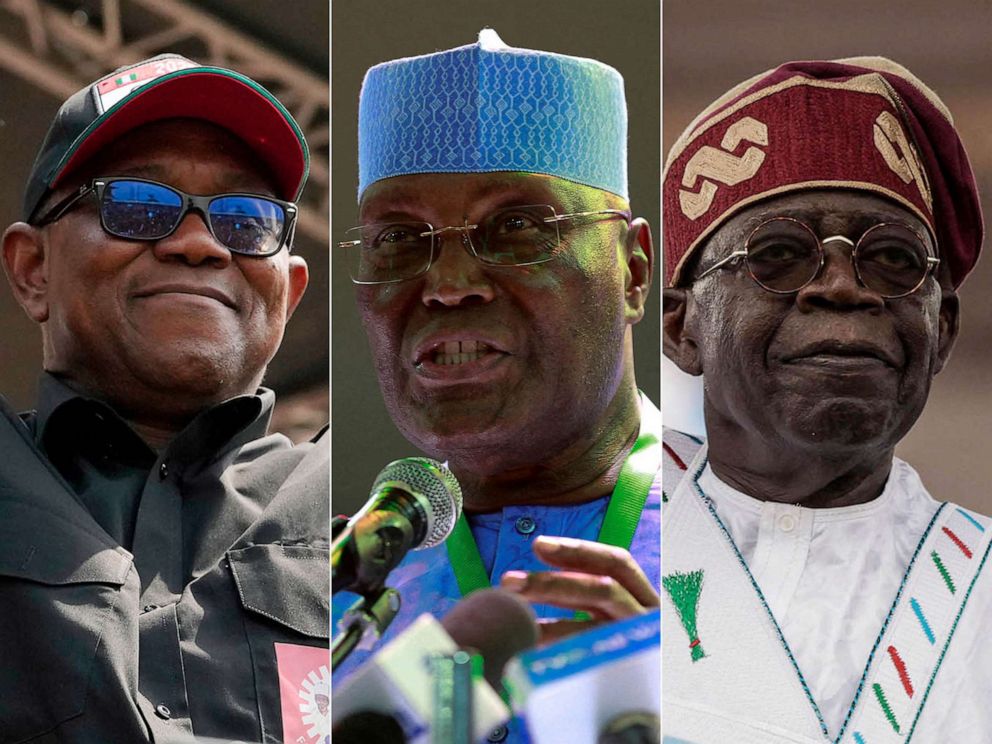
In the 2023 presidential election, Bola Tinubu of the All Progressives Congress (APC) emerged winner with 8,794,726 votes. Atiku Abubakar of the Peoples Democratic Party (PDP) followed with 6,984,520 votes, while Peter Obi of the Labour Party placed third with 6,101,533 votes.
According to the findings, electoral manipulation was not evenly distributed nationwide but concentrated in areas where conditions made it easier to occur. Anambra State recorded the highest anomaly rate at 24.9 per cent, meaning nearly one in four polling units showed multiple red flags. Enugu followed with 16.7 per cent, while Imo recorded 10.9 per cent.
By contrast, Lagos State, the political base of the eventual winner, posted an anomaly rate of 2.3 per cent, while Oyo State recorded just 0.3 per cent. The study argued that this pattern challenges the widespread belief that the ruling party manipulated results uniformly across the country.
The research further revealed that Labour Party strongholds accounted for the largest share of suspicious patterns. Despite winning about 29.1 per cent of the national vote, the LP recorded 2,328 instances of what the analyst described as “perfect scores”—vote distributions clustering around unusually neat percentages such as 50 or 75 per cent.
The study stressed that this does not negate Peter Obi’s popularity in the South-East. Rather, it argued that his overwhelming support in the region may have created an environment where manipulation could occur with less resistance, unlike in more competitive areas where irregularities are harder to conceal.
The researcher also noted discrepancies between results uploaded from polling units and final figures announced by the Independent National Electoral Commission (INEC) in some states, suggesting possible additional layers of manipulation. Rivers State was cited as a notable example, where uploaded results reportedly differed from the final declaration.
Overall, the study concluded that Nigeria’s 2023 presidential election was neither wholly rigged nor fully credible. It observed a shift away from crude tactics such as blatant ballot stuffing toward more subtle manipulation of turnout and vote distribution figures designed to appear plausible.
The research recommended independent audits of election data, compulsory real-time transmission of results, clearer separation of INEC’s responsibilities, stronger internal technical capacity, and visible prosecution of electoral offenders to restore public confidence in future polls.