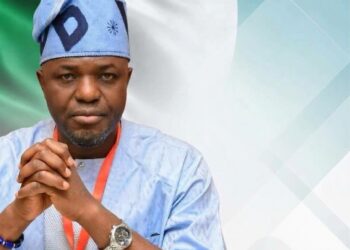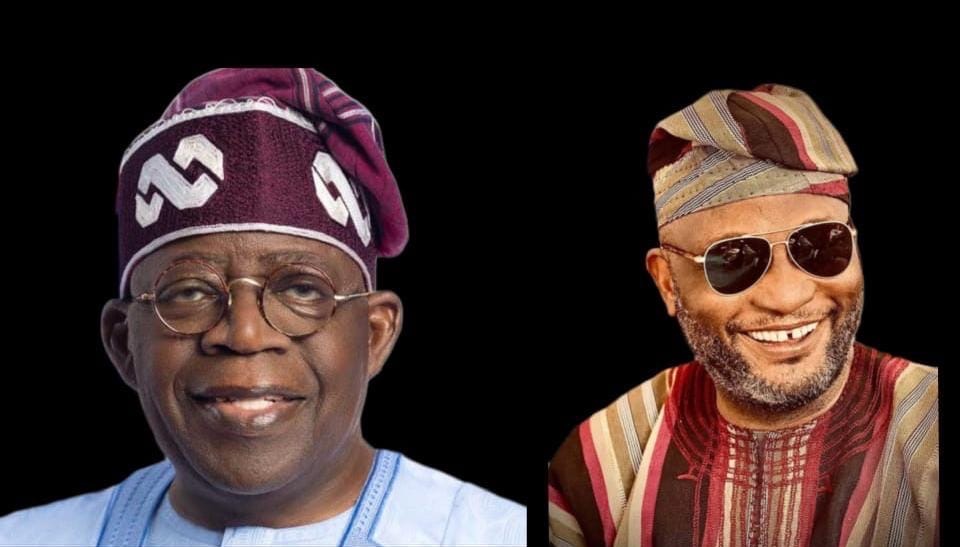
The immediate past Executive Chairman of Agege Local Government and General Coordinator of the Renewed Hope Ambassadors for Agege Federal Constituency, High Chief (Alhaji) Ganiyu Kola Egunjobi (JP), has thrown his weight behind President Bola Ahmed Tinubu’s reform agenda, describing it as bold, strategic and necessary for Nigeria’s long-term recovery.
In a statement reviewing the administration’s performance since its inauguration on May 29, 2023, Egunjobi said the Tinubu-led government has embarked on far-reaching structural reforms aimed at correcting entrenched fiscal distortions, improving productivity and strengthening governance accountability.
He noted that the administration’s policy thrust represents a decisive shift from a consumption-driven framework to a productivity and investment-led economic model anchored on fiscal discipline, institutional restructuring and renewed global engagement.
Egunjobi highlighted the establishment of the Nigerian Education Loan Fund (NELFUND), CreditCorp and the National Credit Guarantee Company (NCGC) as critical interventions designed to widen access to education financing, consumer credit and funding for small and medium-scale enterprises.
According to him, these institutions are foundational to building a credit-enabled economy capable of stimulating inclusive growth and expanding economic participation.
He also commended the enforcement of local government autonomy, describing it as a landmark step toward deepening grassroots governance, improving service delivery and strengthening democratic accountability at the sub-national level.
On public finance, the former council chairman praised the administration’s fiscal reforms, including the naira-for-crude policy, tax system restructuring and the discontinuation of unsustainable deficit financing practices such as the monetisation of FAAC shortfalls.
He argued that these measures have improved revenue flows and reduced the country’s budget deficit from about 50 per cent in 2023 to approximately 25 per cent by 2025.
Egunjobi added that improved fiscal coordination between the federal and state governments has eased financial pressures on sub-national entities, with many states no longer compelled to borrow to meet salary obligations.
Turning to the external sector, he cited a reported increase of over 40 per cent in non-oil exports within two years and a trade surplus estimated at about ₦18 trillion. He also referenced the clearance of a $7 billion foreign exchange backlog and over $40 billion in foreign investment inflows as evidence of renewed investor confidence.
He said strengthened bilateral engagements with foreign governments, development partners and multilateral institutions, alongside improved performance of the Nigerian stock market and reforms at the Central Bank of Nigeria, point to growing macroeconomic stability and policy coherence.
Egunjobi described the administration’s infrastructure drive as strategic and future-focused. He cited the reactivation of local refineries, reforms in the oil and gas sector aimed at curbing theft through asset metering, mining sector reforms and the direct remittance of NNPC revenues to the federation account as measures promoting transparency and efficiency.
He also referenced major projects such as the Lagos–Calabar Coastal Highway and the Sokoto–Badagry Super Highway as legacy investments expected to enhance logistics efficiency, national integration and regional trade.
In the energy and transportation sectors, he praised the rollout of the Compressed Natural Gas initiative and the establishment of regional mega CNG bus terminals, noting that the programme aligns with global energy transition objectives while helping to reduce transportation costs.
On food security and agro-industrialisation, Egunjobi highlighted the creation of the Ministry of Livestock Development, the implementation of Special Agricultural Processing Zones, the Green Imperative Project and the revitalisation of commodity boards for cocoa, cotton, textiles and garments.
He said these interventions are designed to stimulate rural employment, strengthen value chains and boost export earnings.
He also pointed to human capital initiatives such as the 3 Million Technical Talent programme, Technical and Vocational Education and Training, Digital Learning for All, the Nutrition 774 Initiative and the National Health Fellows Programme as evidence of a deliberate alignment between economic reform and social development.
Other milestones, he noted, include the Renewed Hope Ward Development Programme, the establishment of six regional development commissions, reduced IMF debt exposure and expanded access to loans for industries and SMEs.
Describing President Tinubu’s leadership as reform-oriented and focused on long-term national interest, Egunjobi acknowledged that some policies have required short-term adjustments but maintained that they are essential for sustainable recovery.
He urged Nigerians to assess the administration’s performance objectively and support the continuity of its policies as the country approaches the 2027 general elections.
“As a nation, we must look beyond immediate challenges and recognise the foundations being laid for future prosperity. The reforms underway are structural, deliberate and essential for Nigeria’s long-term growth,” he said.
Egunjobi therefore called for deeper national backing for the Renewed Hope agenda, stressing that policy consistency and collective commitment remain critical to consolidating the gains recorded since May 29, 2023.