By Akin Olaniyan
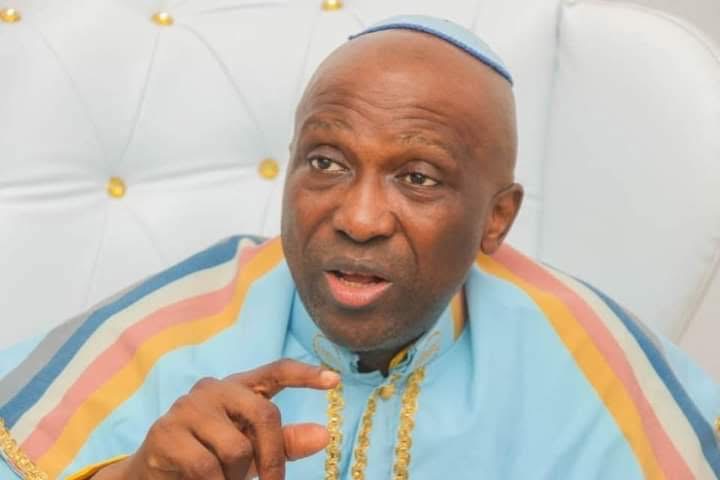
The controversy around the leaked text message between Primate Elijah Ayodele, the founder of the INRI Evangelical Spiritual Church and Minister of Power Bayo Adelabu is not simply scandalous but a classic study into political desperation and clerical audacity. Beyond the content though, those messages have a far more significant as unvarnished ledger entry from Nigeria’s bustling, unregulated ‘marketplace’ of faith and power. Let’s be clear, this is far more than a personal dispute; it gives us an inside peep into intricacies of how spiritual influence is cultivated, negotiated, and offered for transaction in the digital age.
Understanding the cold logic motivating the heated prayers and prophetic pronouncements requires us to go beyond the moral outrage and examine the economy at work. The framework provided by the late French sociologist Pierre Bourdieu is depressingly apt here. His description of society as constructed on a series of competitive arenas or “fields” where individuals and institutions compete in each field for a specific form of power: capital. That sort of capital Bourdieu had in mind is symbolic capital – referring to the prestige, honour, religious sanctity, or public recognition accumulated by an actor. To have a proper understanding, think of symbolic capital as the currency of legitimacy, endlessly convertible into cash.
Using Bourdieu’s frame, we see Primate Ayodele operating in the religious field, the complex sphere where salvation, blessing, protection, prophecy are fast becoming commodities produced, distributed, and consumed by willing patrons. In this sphere, ‘men of God’ have stopped being shepherds who guide their followers but specialists with ‘special connection to God’ and like entrepreneurs, always in fierce competition to monopolise patronage. Gone is the scriptural injunction “freely ye have received, freely give” (see Matthew 10:8) instructed by the Lord Jesus and the model of Christian leaders spending and being spent (see 2 Corinthians 12:15). The Primate’s carefully produced prophecies, clips of which we see on social media suggest that he has long positioned himself as a prophet obviously to build up symbolic capital. His marketing proposition to Adelabu should be seen for what it is – a strategic cultivation of a high-value client. What the text messages show is a cleric marketing a bespoke spiritual-political consultancy service; end of story. The first set of messages, referencing past letters and divine mandate, were not greetings; look like a presentation of his spiritual CV, an inventory of his symbolic capital.
The summary of the exchange between both men reveal the proposition in brutal clarity. The primate’s spiritual capital – his prophetic insight and capacity to influence God for divine favour look like products being positioned to attract the buyer. That the price was quoted in ritual material: 24 party flags and 1,000 saxophones or trumpets should not disguise the intention in a context where the metaphor becomes material. The flags represent political capital – the legitimacy and identity of Adelabu’s ambition. The trumpets represent a form of amplified spiritual capital, tools to make the prayer spectacle visible and potent. Ayodele, as the spiritual specialist, was specifying the ritual inputs required to produce the desired output: electoral victory.
If there was any disguise at all, this was gone the moment Adelabu demanded to know the market cost of the emblems for the ritual. Ayodele’s pricing of ₦50k to ₦130k per trumpet, totalling ₦130 million reveals the audacity of converting spiritual capital to economic capital and Naira rate in a deal that left the minister horrified by the very suggestion. His response, “My governorship ambition is to serve… not to make money. I don’t have this kind of money for prayers” was more than a pushback, it looks like rejection of the whole transactional liturgy. He appears to acknowledge the importance of the marketplace but not its pricing, instead opting for the non-market economy of intercessory prayer.
The outcome of the falling-out, the minister’s decision to petition the Directorate of State Services (DSS) is where Bourdieu’s model explains the public spectacle. A proposition rejected in private had to be sorted out publicly preserve the cleric’s symbolic capital. Ayodele’s pronouncement that Adelabu’s rejection equals his political failure is no vain imagination; it looks like an attempt at critical market maintenance and continued relevance. Were Adelabu to attempt and fail to become governor, the primate’s capital appreciates but if on the other hand; a potential client rejects the prophet’s proposition without consequence, the capital depreciates. By his pronouncement, Ayodele is reaffirming the value and necessity of his service to potential clients – other politicians and his millions of followers. It is a depressingly stark demonstration of what organised religion is becoming: in this field, spiritual authority must constantly be performed and vindicated, or it ceases to be a viable currency.
This incident, therefore, is not an isolated one. It is the logical consequence of decades of hyper-competition in a religious field operating within a political field perceived as inherently spiritualised but obviously disorganised and unproductive. The state, through actors like Adelabu, is a major consumer in this marketplace, seeking the spiritual legitimacy that polls cannot guarantee. Men of God, like Ayodele, are its most audacious suppliers. Their power stems not from formal office but from their accumulated stock of symbolic capital – a capital that can, these messages suggest, be priced.
The danger this poses extends beyond any single election. When prophetic access becomes a tradable commodity and spiritual intervention carries a procurement list, two corrosive outcomes are inevitable. First, it reduces profound questions of public service and collective destiny to a backchannel barter system. Second, it signals to every aspiring power-broker that the path to influence may run as much through the prayer camps of entrepreneurial clerics as through party primaries or policy forums.
The Ayodele-Adelabu texts are more than evidence for a petition; they are a balance sheet. They reveal a Nigeria where the fields of religion and politics are not just adjacent but interlocked in a continuous exchange of capitals – spiritual for political, symbolic for material. The transaction failed this time, laid bare for all to see. But the marketplace remains open, its currencies powerful, and its logic, as these texts meticulously record, increasingly the operating system for our public life.